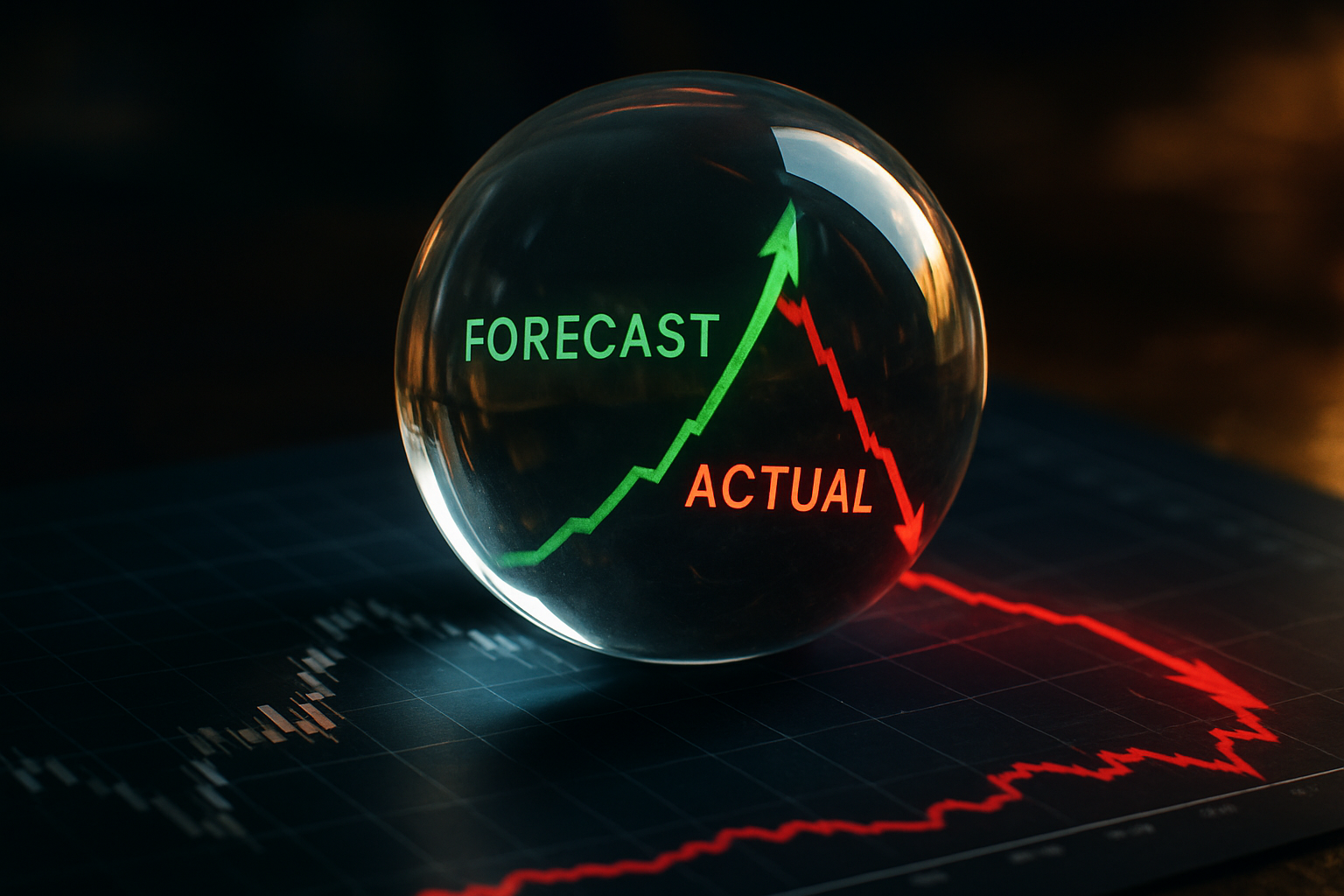
A hedge is a position that pays you in exactly the scenario that hurts you somewhere else. Prediction markets are unusually good at it, because every contract pays a fixed $1 or $0 on a precisely defined event: a team losing, a rate hike, a party winning a chamber, bitcoin falling below a price, a city topping a temperature. If you can name the event that would cost you money, there is often a contract that pays when it happens.
Knowing how to hedge with prediction markets turns them from a place to speculate into a tool for managing risk you already carry. This guide covers the main uses — locking in a sportsbook futures bet, offsetting interest-rate risk, protecting crypto holdings, and covering political and weather exposure — with worked numbers for each, a simple sizing formula, and an honest account of what hedging costs.
| Your exposure | What hurts you | Contract to buy | How it offsets |
|---|---|---|---|
| Sportsbook futures ticket | Your team losing the final | The opponent, on Kalshi or Polymarket | Locks in a profit whoever wins |
| Variable-rate loan | Interest rates rising | Fed hike YES | Pays when borrowing gets dearer |
| Crypto holdings | Bitcoin falling below a level | Bitcoin below that price | Pays during the drawdown |
| Business exposed to policy | A particular party winning | That party, or divided government | Pays if the adverse result arrives |
| Outdoor event or weather-sensitive income | Rain or extreme heat | Kalshi weather contracts | Pays when the weather turns |
How a Prediction Market Hedge Works
The payoff structure is what makes this work. A YES contract bought at price p pays $1 if the event happens, so the profit is (1 − p) per contract in that scenario and a loss of p per contract otherwise. To offset a loss L that you would suffer if the event happens, you need enough contracts that the profit covers it.
That gives a simple sizing rule: contracts needed = L ÷ (1 − p). If a rate hike would cost you $500 and the hike contract trades at 56¢, you need about 500 ÷ 0.44, or 1,136 contracts, costing about $636. If the hike happens, those contracts pay $1,136, a profit of $500 that offsets the loss. If it does not, you lose the $636 premium — but you also avoided the loss you were hedging.
This is insurance, and it is priced like insurance. A hedge bought at a fair market price has roughly zero expected value before fees: you pay the market's estimate of the probability for protection against the outcome. The benefit is not profit; it is a narrower range of results. Our expected value guide explains why a trade can be worth making even when its expected value is slightly negative, and how prediction markets work covers the underlying mechanics.
Hedging a Sportsbook Futures Bet
This is the most common hedge in practice, and the cleanest. Suppose you placed $100 on a team at +1500 before the season. The ticket pays $1,600 in total if they win, a $1,500 profit. The team has reached the final, and on Kalshi the opponent trades at 45¢.
To lock in the same profit whichever team wins, buy enough of the opponent that both outcomes pay equally. The equation is 1,500 − 0.45 × N = 0.55 × N − 100, which gives N = 1,600 contracts costing $720.
| Outcome | Sportsbook ticket | Kalshi hedge (1,600 at 45¢) | Net result |
|---|---|---|---|
| Your team wins | +$1,500 profit | −$720 | +$780 |
| Opponent wins | −$100 stake | +$880 | +$780 |
Kalshi's fee on 1,600 contracts at 45¢ is about $27.72, so the locked-in profit after fees is roughly $752. You give up the chance of a $1,500 win in exchange for a certain $752. You can also hedge partially — buying, say, 800 contracts instead of 1,600 — to keep some upside while guaranteeing a smaller profit.
A prediction market is usually a better place to hedge than the sportsbook's own cash-out offer, because the price comes from other traders rather than from the bookmaker who wrote your ticket. Our comparison of prediction markets and sports betting explains why, and our Super Bowl LXI odds show current prices for every team.
Hedging Interest-Rate Risk With Fed Markets
Anyone with a variable-rate loan loses when rates rise. Fed decision markets let you buy protection against a specific meeting's outcome, which is unusually precise compared with the tools most individuals have.
Take a $200,000 variable-rate balance. Each 25 basis point increase adds about $500 a year in interest. As of September 21, 2026, a 25 bp hike at the Fed's October 28 meeting trades at 55–56¢ on Kalshi. Covering $500 of annual cost means buying about 1,136 hike contracts at 56¢, costing roughly $636 plus about $19.60 in fees.
That example also shows the limit of hedging. Paying $636 to protect against $500 of cost is expensive, because the market already thinks the hike is more likely than not. Hedges are cheapest when the event you fear is priced as unlikely. Here, the more useful move might be a partial hedge, or covering a longer horizon with the market on how many changes the Fed makes by year-end. Our Fed rate odds cover both markets, and the live Fed decision page shows current prices.
Savers face the opposite exposure. Higher rates help them, so a contract that pays if the Fed holds or cuts offsets the scenario in which their savings rate stays lower than expected. Kalshi also lists markets on the inflation and jobs data that drive Fed decisions, which our guide to economic data markets covers.
Hedging Crypto Holdings With Bitcoin Price Markets
Both major venues list contracts on where bitcoin will trade at specific times, and those contracts can offset part of a crypto portfolio's downside.
Suppose you hold 0.5 bitcoin, worth $50,000 at an illustrative price of $100,000, and a fall of 15% over the next month would cost you money you need. A contract paying $1 if bitcoin finishes the month below a given price pays out in exactly that scenario. If the market prices it at 20¢, and the drop would cost you $7,500, you would need about 7,500 ÷ 0.80, or roughly 9,375 contracts, costing about $1,875. That is expensive protection for a single month, which is why most holders hedge only the part of the drawdown they genuinely cannot absorb.
The details matter more here than anywhere else, because crypto contracts settle on a specific price source at a specific moment. Kalshi's bitcoin contracts settle on a 60-second average of the CF Benchmarks Real-Time Index; Polymarket's shorter-dated crypto markets settle on Chainlink price data and its hourly and daily ones on Binance candles. A hedge that settles on a different source or time than your actual exposure has basis risk. Our guide to bitcoin prediction markets covers the settlement rules.
Hedging Political and Policy Risk
Businesses whose fortunes depend on policy — tariffs, regulation, taxes, government contracts — carry political risk that is hard to hedge with conventional instruments. Election markets offer a direct route.
Suppose your business would suffer under unified control by one party but do fine under divided government. Polymarket's balance-of-power market for the 2026 midterms priced a Republican Senate with a Democratic House at 30.5¢ on September 21, 2026. Buying that outcome pays if Congress ends up divided, and buying the sweep you fear pays if it does not. Our 2026 midterm election odds show every chamber and race price.
Political hedges carry two particular risks. The first is that policy does not map neatly onto election outcomes: a party can win and then not do what you feared. The second is legal. Election contracts are at the centre of the fight over whether these markets are gambling, and availability varies by state; our legal guide covers where you can trade them.
Hedging Weather Risk
Kalshi lists daily temperature markets for several US cities, settling on the National Weather Service's daily climate report, along with rain and other weather contracts. For anyone whose income depends on the weather — an outdoor event organiser, a café with a large patio, a small farm — these are a rare way to buy protection against a single bad day or month.
Weather hedges suit small, specific exposures. An event that loses $2,000 if it rains can be partly covered by a rain contract, sized with the same formula. The limitation is basis risk: the contract settles on a specific weather station, and your event may be miles away. Our guide to Kalshi weather markets explains how the contracts work and which stations they use.
Hedging Positions You Already Hold on a Prediction Market
The same logic applies inside a prediction market portfolio. Traders often build positions that are more correlated than they look: a Super Bowl contract on a team and an MVP contract on its quarterback, or a nomination contract and a party contract in the same election. When those positions win or lose together, the portfolio is less diversified than the number of positions suggests.
The fix is to identify the single scenario that would sink most of your book and buy a contract that pays in it. If you hold the Chiefs to win the Super Bowl and Patrick Mahomes to win MVP, a Chiefs collapse hurts both, so a position on a rival contender offsets part of that. Our NFL MVP odds explain how team and award markets move together.
A special case is the cross-venue hedge. If you hold YES on Polymarket and the same event trades cheaper as NO on Kalshi, buying that NO locks in your position's current value — and if the combined price is under $1, it locks in a profit. That is arbitrage by another name, and our arbitrage guide covers the execution.
A Hedging Checklist
Before placing any hedge, answer five questions. What exact event causes the loss, and does the contract pay on that event and no other? How large is the loss, in dollars, and what share of it do you need to cover? What does the protection cost at the current price, including the spread and fee? Does the contract settle on the same source and at the same time as your exposure? And can you exit the hedge early if your exposure changes?
The last question depends on liquidity. A hedge you cannot sell is a hedge you are committed to, and on thin markets exiting can cost several cents per contract. Our guide to prediction market liquidity explains how to check the bid side before you commit.
What Hedging Costs
Four costs apply to every hedge. The first is the premium: at a fair price, you pay roughly the probability of the event for each dollar of protection. The second is trading costs — the spread and the fee on entry, and again if you exit early. Kalshi's fee is 0.07 × contracts × price × (1 − price); Polymarket's taker fee is 0.75–1.80% by category. Our market fee calculator shows both.
The third is basis risk, the gap between what the contract pays on and what actually hurts you. A Fed contract pays on the target range, not on your loan's rate; a weather contract pays on a station's reading, not on your location. The fourth is resolution risk: two contracts that look identical can settle differently on an edge case, which our explainer on how prediction markets resolve covers.
There is also a tax mismatch to be aware of. Sportsbook winnings, prediction market profits and investment losses may be reported under different treatments, so a hedge that nets to zero economically may not net to zero on your tax return. The IRS has published no guidance specific to prediction markets; our prediction market tax guide covers the treatments in use.
When Not to Hedge
Do not hedge risks you can afford to carry. Every hedge costs money on average, so hedging small exposures is a slow way to lose it. Hedge the outcomes that would genuinely damage you, and accept the rest.
Do not hedge with contracts you do not understand. A hedge that settles on the wrong source, the wrong date or the wrong definition can pay nothing when you need it. And do not confuse hedging with speculation: a position sized far beyond your exposure is a bet, not a hedge.
For most people, the best starting point is the simplest case — locking in a sportsbook futures ticket, or trimming a large winning position, which our guide to cashing out early covers. Kalshi, as a CFTC-regulated exchange settling in dollars, is the natural venue for most of these hedges; our Kalshi review covers it, and our ranking of the best prediction market apps compares the alternatives.
Frequently Asked Questions
Can you hedge a sports bet with a prediction market?
Yes. Buying the opposing team on Kalshi or Polymarket can lock in a profit on a sportsbook futures ticket. A $100 ticket at +1500 on a finalist can be hedged with 1,600 contracts on the opponent at 45¢ to lock in about $752 after fees.
How do I calculate how much to hedge?
Divide the loss you want to offset by (1 − price). To cover a $500 loss with a contract at 56¢, buy about 500 ÷ 0.44, or 1,136 contracts.
Is hedging with prediction markets profitable?
Not on average. A hedge bought at a fair price has roughly zero expected value before fees, and fees make it slightly negative. The benefit is a narrower range of outcomes, not profit. See our expected value guide.
Can I hedge my mortgage with Fed prediction markets?
You can offset part of your exposure to rising rates by buying hike contracts sized to the extra interest. Protection is expensive when a hike is already likely. Our Fed rate odds show current prices.
Can I hedge bitcoin with Polymarket or Kalshi?
Yes, with contracts that pay if bitcoin finishes below a set price at a set time. Check the settlement source and timing, because a mismatch with your actual exposure creates basis risk.
What is basis risk in prediction market hedging?
The gap between what the contract pays on and what actually affects you — for example, a weather contract settling on a station miles from your event. It means a hedge may not pay exactly when you lose.
Are hedges on prediction markets taxed?
Yes. Profits are taxable when realised, and the treatment may differ from the treatment of the loss you hedged. See our prediction market tax guide.
Which platform is best for hedging?
For most US users, Kalshi, because it is CFTC-regulated, settles in dollars and lists rate, economic data, weather and sports markets. Polymarket offers deeper books on some markets and settles in USDC.